




Aluminium International Today News
-
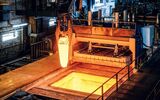
Decarbonisation – using oxygen now to reduce carbon emissions
Emissions from UK manufacturing account for 17% of the UK’s total GHG emissions – the third highest emitting sector. As calls to use carbon pricing as an effective climate action tool increase, large emitters are finding that their compliance costs are dramatically increasing, with no end in sight. As these financial pressures increase in both scope and amount, and while carbon neutral technologies are still being researched and developed, there are options available to industry to reduce carbon emissions from natural gas now and save on carbon pricing.
12 February 2024 -

2023 in review: Every Can Counts reflects on its UK highlights
Creating a sustainable future is more important than ever before and it is crucial that individuals are empowered and encouraged to take everyday steps to reduce their negative impact on the planet.
05 February 2024 -

The Rock and Roll of continuous furnace aluminium log homogenisation monitoring
The homogenisation heat treatment process
After casting, aluminium logs/billets undergo a homogenising heat treatment process to ensure uniform distribution of the alloying elements, such as Zn, Cu, or Mg2Si and Fe, within the structure of the log. This involves heating the log at a controlled rate, soaking at temperature (typically 480 °C to 540 °C / 896 °F to 1004 °F ) for a specific period of time, and cooling at a specific rate to allow the precipitating elements to become more evenly distributed throughout the material. Each phase of the heat treatment process is temperature critical. An accurate means of monitoring the log internal temperature throughout the whole furnace cycle is, therefore, important to the success of the homogenisation process, material properties, and efficiency of the furnace heat treat operation.
29 January 2024 -

Safety habits: The true cost
Most facility managers know the safety protocols they need to follow go beyond just personal protective equipment (PPE). Safety requirements only increase when workers are placed in more demanding, high-risk environments. Metal, cement, pulp and paper and other processing facilities recognise the potential for injuries and downtime when accidents occur, but few take the time to calculate the total cost. Additional costs include increased downtime and lost profits, healthcare costs, safety fines and potential liability concerns.
13 December 2023 -

In the eye of the storm? Commodities firms are running out of time to get ahead on sustainability
There are dark storm clouds on the horizon. Commodities producers, buyers and traders may be eyeing them nervously, aware that when the storm breaks, a deluge of regulations and supply chain demands will pour down on them. Now is the time for firms to ensure they are aware of the sustainability characteristics of their operations and supply chains, so that risks and new expectations can be managed well. Those who do may find they don’t just weather the storm but find rich opportunities as the world moves towards net zero.
29 November 2023 -

Scaling circularity: How to reach decarbonization goals
In a world experiencing the impacts of a warming climate, decarbonization is imperative. Around the globe and across industries, stakeholders are raising their expectations for companies to lower their carbon emissions and are looking for transparent reporting and meaningful progress toward sustainability goals.
20 November 2023 -

Recent milestones, and those to come
The Hydro US and Canada branch achieved the ASI Performance Standard Certification in July 2023, which saw 23 sites being certified simultaneously. Zahra Awan* Spoke with Jerrod Hoeft who was recently assigned to the role of Head of Commercial Transportation & Sustainability, Hydro Extrusion, on this milestone.
14 November 2023 -
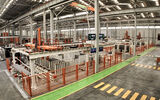
Benkam Alu Extrusions
BENKAM Alu Extrusions is a Manufacturer of a high level with its strong market presence in more than 15 countries serving different sectors including construction, automotive and energy industries. With its current production capacity of 36,000 tons of extruded profiles it manages to satisfy the market demand in Architectural Sector, supplying architectural profiles as windows and doors, terraces, railings, facades, and outdoor pergola solutions.
Read the full Q&A, which goes delves into the company.
14 November 2023 -

Changes in behaviour and formalised collection systems will strengthen aluminium can recyclability
We must share lessons in effectively managing aluminium cans as a waste product from one country to another, to mitigate carbon emissions, says Marlen Bertram, IAI’s Director – Scenarios & Forecasts.
06 November 2023


