




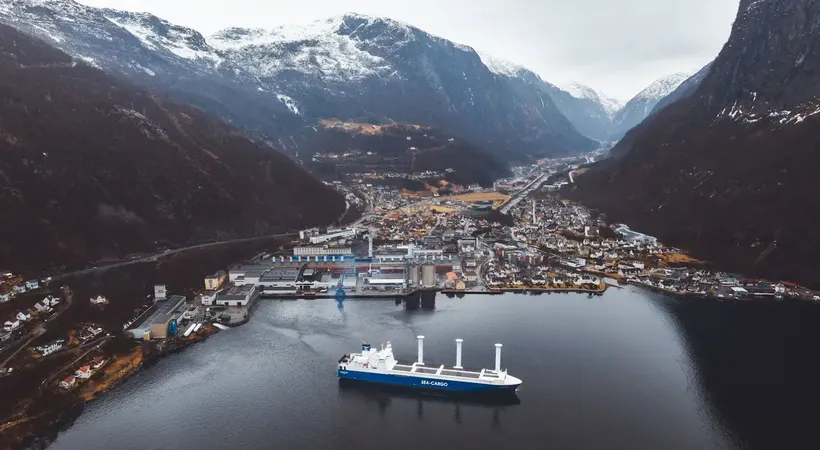
Hydro has reduce its shipping emissions by more than an a third on one of its aluminium routes.
A reduction in CO₂ emissions of 30-35 percent was achieved after upgrades on theTrans Sol and Trans Hav cargo vessels.
The ships are operated by Sea‑Cargo and used by Hydro to transport aluminium products from Norway to customers in Europe.
Gerd Aalborg Aas, Vice President for Logistics and Metal Management in Hydro, said most logistics operations today are powered by fossil energy sources and reducing emissions from this part of the value chain was a key priority for Hydro.
“We are working systematically to lower the footprint of our logistics chain by transferring volumes from road to sea, developing greener shipping routes, using new technology and digital tools to improve efficiency,” he said.
The upgrades on Trans Sol and Trans Hav combine wind assisted propulsion, onboard renewable energy, energy storage, optimised propulsion, smart power management, and shore power, which have reduced fuel use and emissions while maintaining operational reliability.
Shipping accounts for around three percent of global greenhouse gas emissions and is a challenging sector to decarbonise.
One of the three main pathways in Hydro’s decarbonisation roadmap is to phase out fossil energy throughout the value chain, including logistics and transportation.
Hydro’s logistics organisation has targetteted a 30% reduction in logistics-related emissions by 2030.
This milestone is one of several initiatives in Hydro’s logistics operations. Technology upgrades and smarter shipping solutions have helped reduce emissions across multiple routes, including Hydro and Wilson’s energy efficient transport solutions launched last year, as well as technology upgrades on Sea-Cargo’s SC Connector in 2021.
The emissions reductions achieved on the Trans Sol and Trans Hav route represent around 20% of this total logistics reduction ambition for the business area Hydro Aluminium Metal.
Trans Sol and Trans Hav are two of four vessels that regularly carry Hydro’s products from the company’s five primary aluminium plants in western Norway, Sunndal, Høyanger, Karmøy, Husnes and Årdal, to European markets.
