





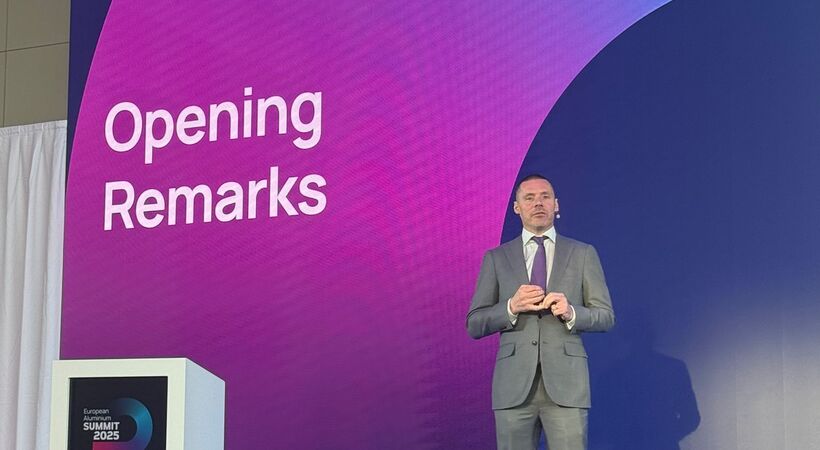
This week European Aluminium’s first ever summit commenced, bringing together industry leaders, academics and technical experts from the aluminium industry.
More than 250 people attended the conference, which took place at the Skyhall, Brussels Airport, Belgium, on 18 November.
During the event, speakers and panellists warned of the multiplying issues the European aluminium industry faces, such as: high energy costs, uncertainty, China, and the challenges brought about by the green transition.
Paul Voss, Director General at European Aluminium, opened the conference by noting how challenges in the aluminium industry have multiplied.
Mr. Voss introduced the Commissioner for Trade and Economic Security at the European Commission, Maroš Šefčovič.
Mr. Šefčovič outlined the commission’s plans to design a policy instrument to safeguard Europe’s access to adequate quantities of scrap.
The measures are expected to come into effect Spring 2026.
The commissioner also emphasised the importance of diversifying and expanding trade agreements with other countries for Europe to better protect the European industry.
The event then launched into a series of panels addressing the key conversations currently happening in the industry. The panels were moderated by Juliette Foster, journalist and presenter.
The first panel of the day discussed the future of the aluminium industry amidst global shockwaves and market volatility.
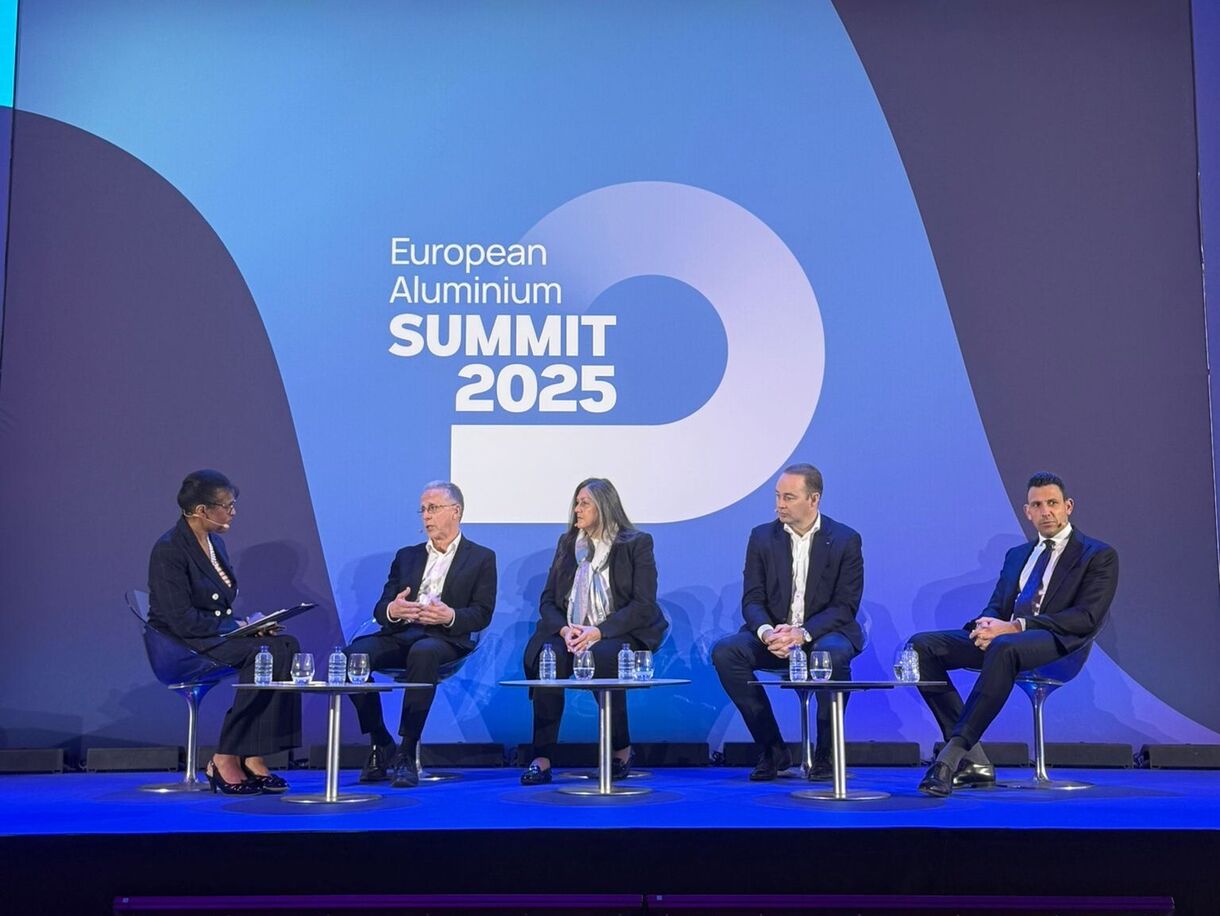
The panellists included Paul Warton, Executive Vice President for Hydro Extrusions, Ingrid Jorg, EVP & COO and future CEO of Constellium, Rob van Gils, CEO and Managing Partner at HAI Group, and Robin Scheiner, Head of Aluminium/Alumina and Bauxite at Glencore (from left to right, see above).
The panellists shared perspectives on managing risk, adapting business strategies, and seizing new opportunities in an uncertain global environment.
When asked to use one word to describe the industry, Mr. Warton commented how the future of the global industry is “good”, but for the European industry the sector feels “stuck” with high energy costs and lost smelter capacity.
In the closing keynote for the first panel, Torbjorn Sternsjo, CEO of Arctial presented plans for a €3 billion plant in Europe that would produce 600,000 tons of primary aluminium a year.
Located in Kokkla, Finland, if the final investment decision is made by 2027, the plant will be ready by 2029.
The second panel of the day comprised of Hildegard Bentele, MEP of the European Parliament, Nick Keramidas, General Manager EU Affairs & Regulatory Advocacy, Peter Handley, Strategic Advisor at the Hague Centre for Strategic Studies, and Chloe Papazian, Trade Policy Analyst at OECD.
The session explored the balance between sustainability and economic pragmatism in the EU’s long-term transition strategy, assessing how this shift impacts supply chains strategy, trade relations, and regulatory frameworks.
The diversification of trade relationships was highlighted as essential for this balance of protecting the European market and reaching sustainability goals.
A key takeaway from the panel was also making the European industry stronger to level the playing field with the likes of China and the US.
Mr. Handley commented: “We can’t take a knife to a gun fight.”
The panels and keynote speeches were intercut with networking opportunities for attendees to forge new partnerships and rekindle old ones.
The third panel continued the theme of sustainability by focusing on how traceability technologies can allow the EU to reach policy goals.
The panel was formed by Jonathan Vanherberghen, Director Government Affairs Europe at Rio Tinto, Mesbah Sabur, Founder of Circularise, Toralf Hagenbruch, Partner at McKinsey & Company, and Patric Steeg, Senior Manager Sales Sustainability, RONAL Group.
Mr. Vanherberghen discussed Rio Tinto’s blockchain technology, START (Sustainability, Traceability and Assurance by Rio Tinto), that allows for transparency across the supply chain and sustainable decision making.
This culminated in Rio Tinto’s partnership with Corona Canada, where 1.2 million cans were released with QR codes using traceable technology to encourage consumers to learn more about the cans’ low carbon footprint.
The conclusion was the biggest challenge in supply chain traceability is both limited supply chain participation and a lack of reliable data: “Sustainability is a team sport,” added Mr. Vanherberghen.
A key talking point throughout the event was the Chinese automotive industry dominating the market over European competitors, especially with electric vehicles (EVs).
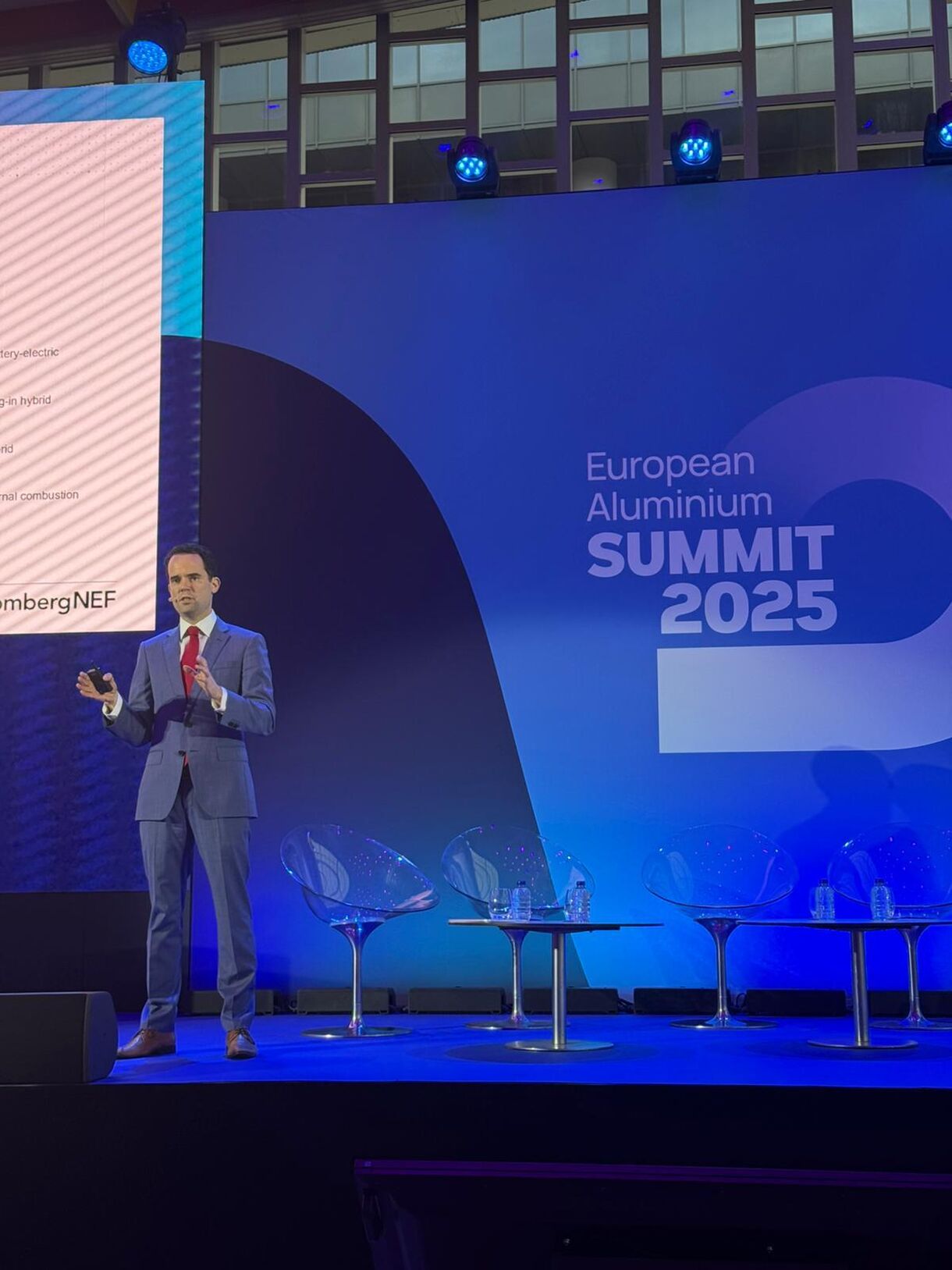
This came to a head with the final panel of the day, introduced with an opening keynote by Colin McKerracher (see above), Head of Clean Transport at BloombergNEF, who highlighted EV adoption trends.
Mr. McKerracher joined Michael Hahne, Vice President Commercial at Novelis Europe, Alexander Dorsel, Head of BU Specialties and Business Development at Speira, William Todts, Executive Director at Transport & Environment, and Stefan Hillstroem, Director Technical Regulation, Government Affairs and External Regulations at BMW Group.
The panel discussed Europe’s period of transformation in competing with Chinese automakers, as China in the last few years has become the world’s largest exporter of vehicles.
Despite this, Europe continues to be ahead of the game on recycled and low carbon content, with European automakers setting sustainability standards.
Paul Voss returned to the stage to close the event, putting emphasis on the rich conversations and meaningful connections that had taken place throughout the day.
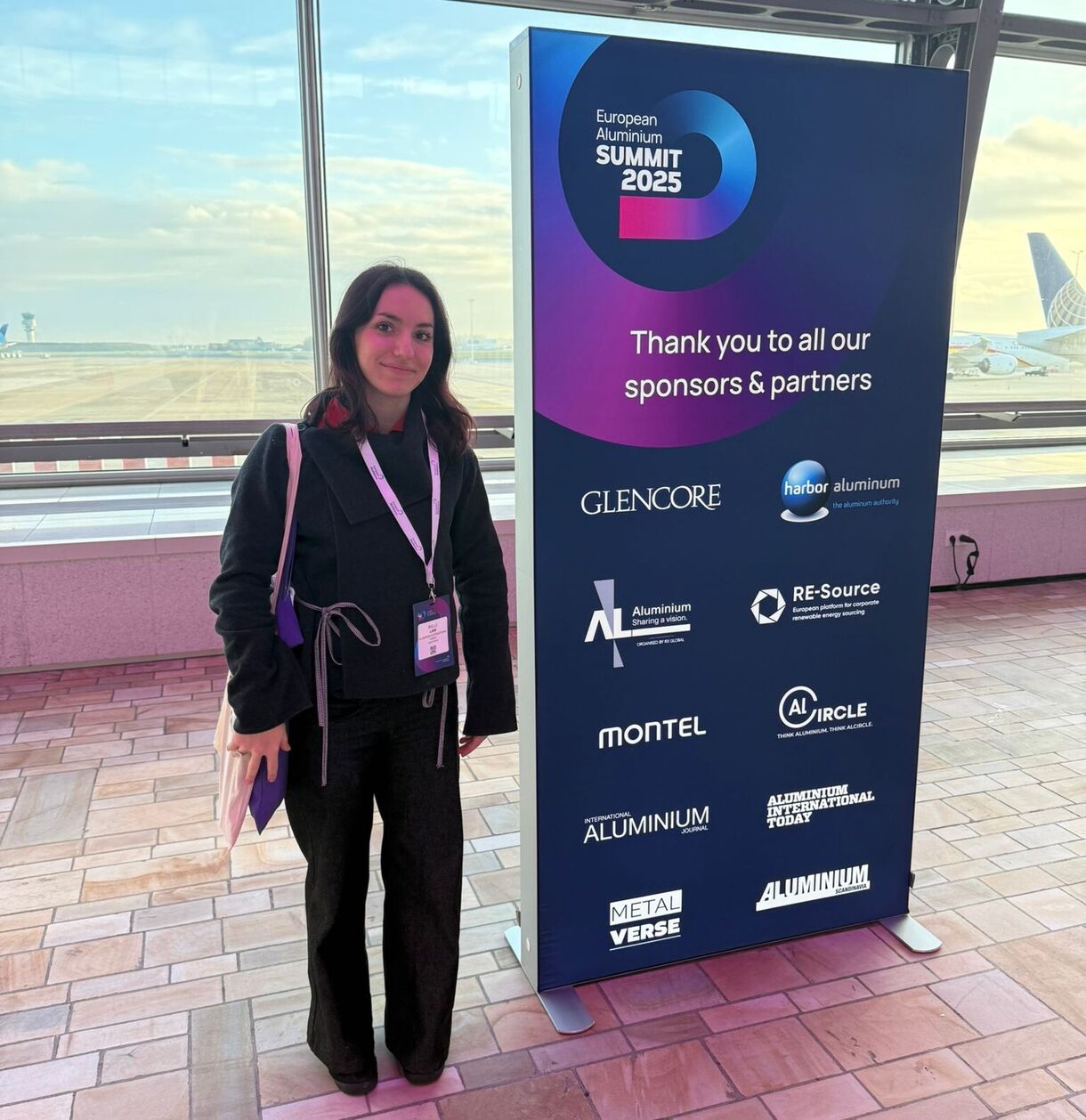
Belle Law, Editorial & Digital Content Assistant for Aluminium International Today, at the European Aluminium Summit.
