





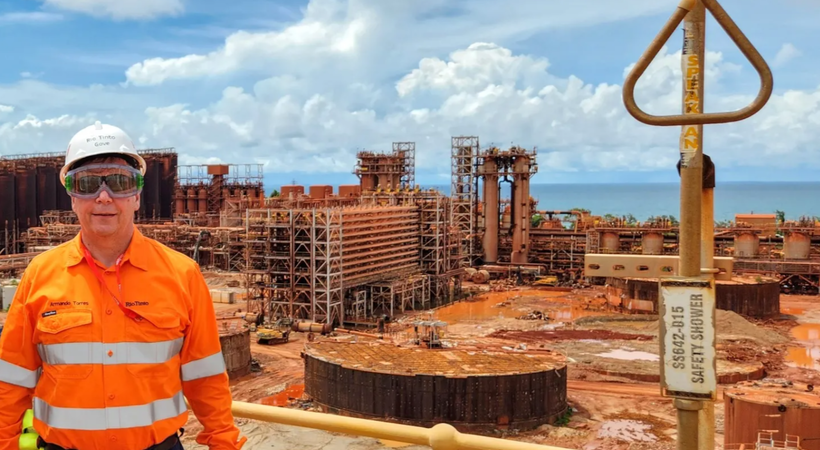
Armando Torres was appointed chairman of the Australian Aluminium Council earlier this year.
In his first interview since the appointment his discusses his career, his role as Managing Director of Rio Tinto’s Pacific Operations, as well as how to increase awareness of aluminium to a wider audience.
The full, unabridged, interview is published in the November/December printed issue of AIT.
Mr Armando Torres’ role as chairman of the AAC will be to help increase the understanding of the aluminium industry in Australia as well as support the AAC as it advocates for policy reform.
The AAC represents Australia’s bauxite mining, alumina refining, aluminium smelting and downstream processing industries.
The aluminium industry has been operating in Australia since 1955, and today it supports approximately 21,000 direct jobs and more than 55,000 indirect jobs.
Mr Torres described the enormous potential of the Australian aluminium industry. He said it was a unique national asset which delivers economic benefits to regional communities and the nation.
He has 35 years experience working in industry including stints at Alcoa and Rio Tinto Alcan before his current role.
He admitted the sector is facing some serious challenges at the moment, particularly in regards to energy costs.
We spoke to Mr Torres before the news broke about Tomago Aluminium and the challenges it is facing in regards to securing a new energy contract.
But at the time of the interview he suggested securing and growing the future of the Australian aluminium industry requires collaboration, long-term thinking, and a shared commitment to positioning Australia as a global leader in sustainable aluminium.
To do so would require a mix of financial and non-financial means of support, including:
*Internationally competitive supplies of firmed clean energy, delivered at the scale and timelines needed
*Production Credits and a Transformational Infrastructure and Technology Fund to enable Australia to be remain globally competitive, and attract global decarbonisation investment
Trade competitiveness was essential to maintaining Australia’s global position. The country’s aluminium industry generates approximately $18 billion in economic value a year.
“To remain competitive, we need streamlined regulatory approvals, competitively priced power, reduced operating costs, and strategic partnerships that support export growth," he said.
“The AAC is engaging with policymakers to address these barriers, and I will advocate strongly for reforms that protect and grow our international market share.
“Advancing the full aluminium value chain means recognising the interconnected nature of our industry.
“We need policies that support every step of the process and that encourage innovation, workforce development and regional growth.
“As Chair, I will focus on building awareness of this value chain and promoting its strategic importance to Australia’s economy and sustainability goals.
“These goals are not isolated. Achieving them requires collaboration, long-term thinking, and a shared commitment to positioning Australia as a global leader in sustainable aluminium.”
The full interview will be published next week in the printed issue of AIT.