




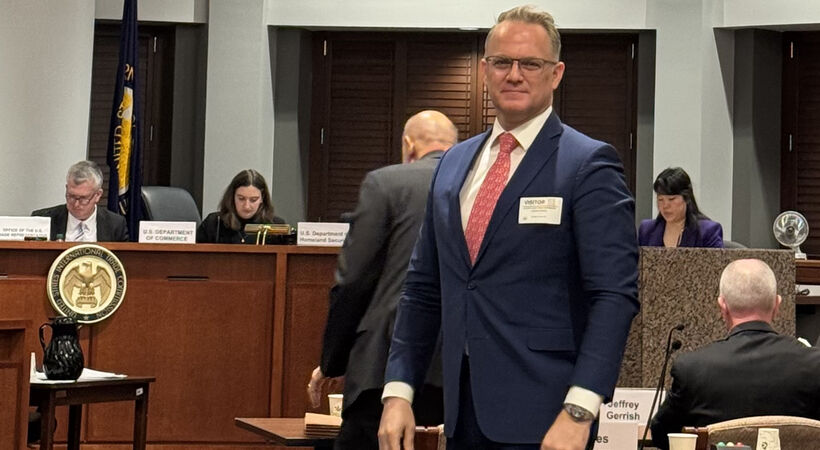
In testimony during a public hearing on Section 301 investigations, the Aluminum Association urged the Office of the United States Trade Representative (USTR) to take targeted, enforceable action to address structural excess capacity driven by non-market economies.
Association President & CEO Charles Johnson testified that global aluminium markets remain heavily distorted by state-supported overcapacity, particularly in China, that undermines U.S. producers and threatens continued domestic investment.
“The US aluminium industry can compete with anyone in the world—but not with foreign governments,” said Johnson.
“State-driven excess capacity continues to distort markets and disadvantage American manufacturers.”
Johnson emphasised that effective Section 301 remedies must distinguish between market and non-market behaviour.
While excess capacity can occur in market economies through normal cycles, persistent oversupply in non-market economies is driven by subsidies, state ownership and below-market financing that enable uneconomic production and suppress global prices.
In a 2019 report, the OECD estimated that out of $70 billion provided to 17 of the largest firms operating along the aluminium value chain from 2013 - 2017, 85% went to just five Chinese-owned firms (Chalco, China Hongqiao, QPIG, SPIC, China Zhongwang).
Subsequent OECD analysis examined below-market finance provided by governments to 32 major aluminium companies.
That report estimated support to exceed 4% of the annual revenue of Chinese firms, compared to support of just 0.2% of the annual revenue of other firms.
The association also called on USTR to strengthen existing trade enforcement tools by ensuring any new remedies:
- Address circumvention and trans-shipment by non-market actors
- Cover aluminium and downstream, aluminium-intensive products
- Stack with existing Section 232 tariffs for non-market economies
- Not stack on imports from market-based economies
- Continue to exempt aluminium scrap from import tariffs while keeping more of this critical material for U.S. manufacturers
“Taken together, these steps will help ensure that U.S. aluminium producers can compete on a level playing field, continue investing in local communities and strengthen America’s supply chain resilience.”
The U.S. aluminium industry has invested more than $11 billion in U.S. operations over the past 10 years, including two new aluminium rolling mills for the first time in nearly 50 years.
Investment in the sector is powered by strong demand, strategic trade enforcement and a stable policy environment.
The Trump administration has consistently acknowledged aluminium’s critical role in both economic and national security.
The Aluminum Association recently called for targeted export controls on certain high-value aluminium scrap to keep more of this material at home and away from strategic competitors like China.
The full testimony can be read here.
